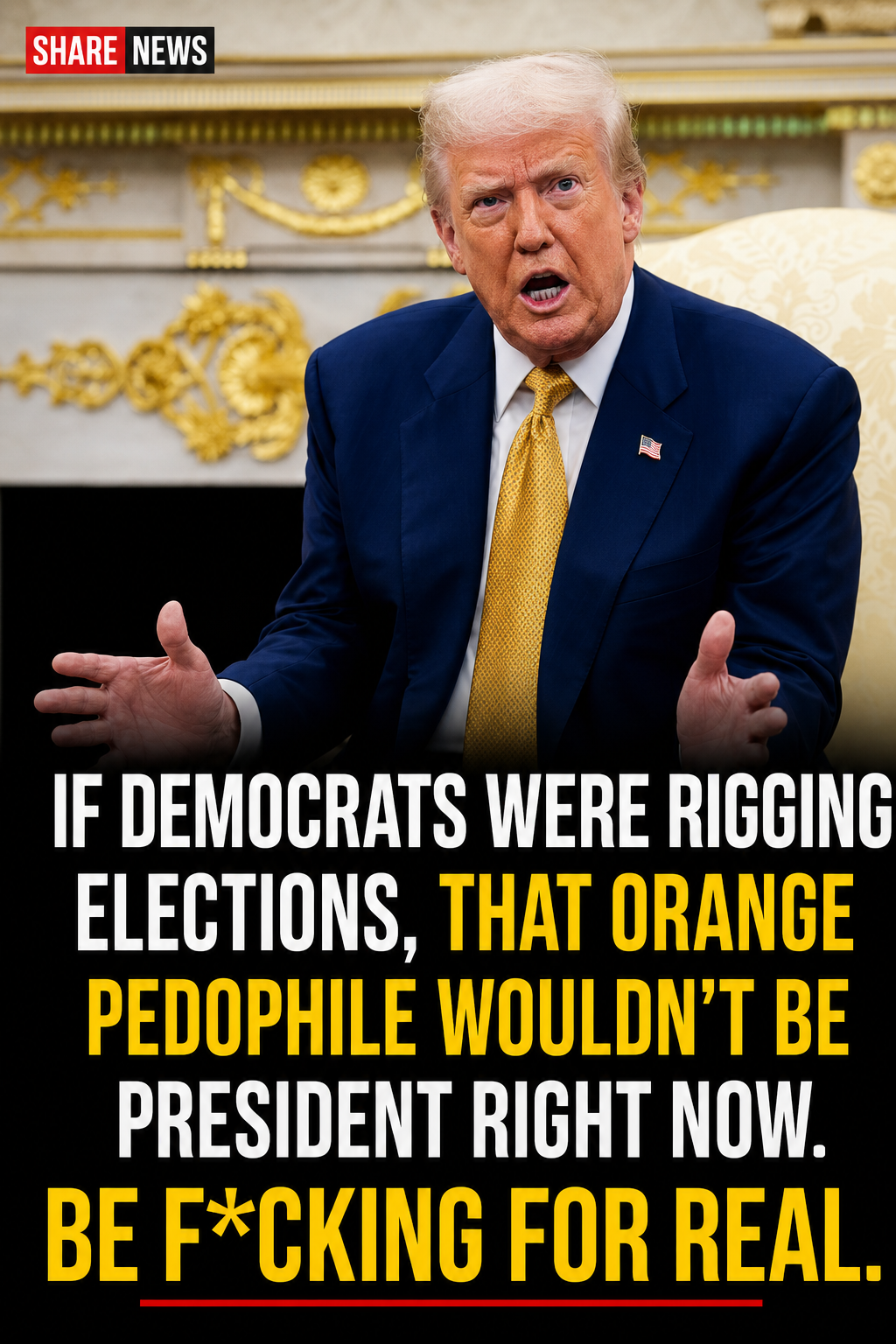
Washington, D.C.: A politically charged social media graphic criticizing former U.S. President Donald Trump has gone viral, generating intense debate across online platforms. The post combines allegations about election integrity with personal attacks against Trump, reflecting the increasingly polarized nature of political discussions in the United States.
The image, which has been widely shared on Facebook, X (formerly Twitter), and other social media networks, argues that claims of widespread election rigging are inconsistent with Trump’s electoral success. The post further uses inflammatory language and serious accusations against the former president, prompting strong reactions from both supporters and critics.
Supporters of Trump have dismissed the graphic as partisan propaganda, arguing that it relies on insults rather than substantive political arguments. Critics, meanwhile, have used the post to challenge claims about election fraud and to express broader concerns about Trump’s leadership and public statements.
Political analysts note that emotionally charged content often performs exceptionally well on social media because it encourages engagement, comments, and shares. However, such posts frequently prioritize persuasion and opinion over balanced reporting, making it important for readers to distinguish between commentary and verified factual information.
The controversy also highlights the continuing impact of election-related debates in American politics. Questions surrounding election security, voter confidence, and the legitimacy of election outcomes remain major topics of discussion among voters, political leaders, and media organizations.
Fact-checking experts emphasize that allegations involving election fraud or criminal misconduct should be evaluated using credible evidence, official investigations, court records, and reliable news reporting rather than viral social media graphics alone. Viral posts often present strong opinions but may not provide the full context necessary to understand complex political issues.
As the image continues to circulate online, it serves as another example of how political content can quickly attract attention and fuel intense public debate. In an era dominated by social media, users are encouraged to verify claims through multiple trusted sources before accepting or sharing them as factual information.