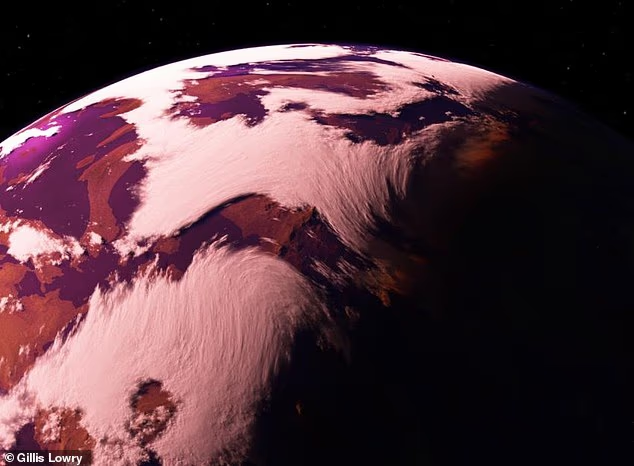
45 planets outside our solar system that are surprisingly similar to Earth and might have the right conditions for life. Even more amazing, four of these planets are only about 40 light-years away—very close in space terms, compared to the vast distances between most stars.
A New Map for Finding Life
What makes them special is that they orbit in the “habitable zone”—the sweet spot around a star where it’s not too hot or too cold, so liquid water could exist. Since water is essential for life, these planets are the best bets for finding it.
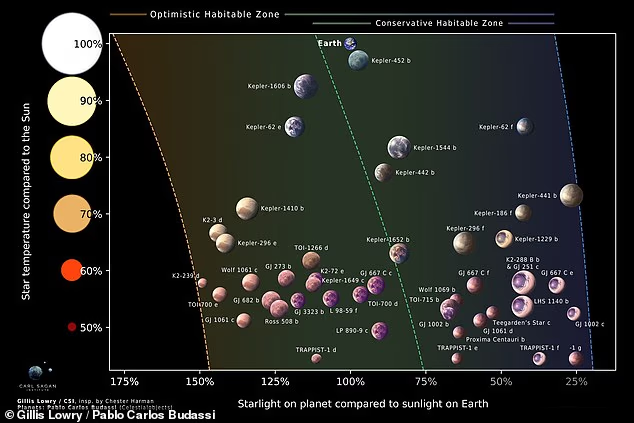
These worlds aren’t just the right size; they also get similar energy from their stars, which could create temperate climates. Scientists hope to study them in detail over the next decade, looking at their atmospheres and searching for signs of life.
The new list narrows the field to worlds that aren’t just Earth‑sized, but also receive similar levels of star energy and have potential conditions for temperate climates. Scientists hope these worlds are prime candidates for future telescope observations, atmospheric studies, and even biosignature searches in the coming decade.
Why 45 Planets Matter
Although astronomers have discovered more than 6,000 exoplanets to date, only a small fraction are considered both Earth‑like and situated in their star’s habitable zone. The new ranking of 45 planets highlights those that have the best chance of having Earth‑like environments — including rocky surfaces and temperatures that could allow liquid water.
This list is important not just for raw numbers, but for prioritizing future research. By selecting targets with the strongest potential for life‑supporting conditions, scientists can maximize the value of upcoming space telescopes like NASA’s James Webb Space Telescope (JWST) and future direct imaging missions. Searching all thousands of known exoplanets in detail would be impossible; these 45 become the “first wave” of exploration.
Four Worlds Just 40 Light‑Years Away
The most exciting part of this discovery isn’t just that these planets exist—it’s how close they are. Four of these Earth-like worlds are sitting just 40 light-years away. In the vast, empty ocean of our galaxy, that’s basically like finding a neighbor living just a few houses down.
To be honest, “close” is a relative term. If we hopped on the fastest spacecraft humans have ever built, it would still take us tens of thousands of years to get there. We won’t be visiting them in person anytime soon.
But here’s why that distance matters for us today: At 40 light-years, these planets are close enough for our telescopes to actually “see” what’s happening in their skies. We aren’t just looking at blurry dots anymore; we’re getting to the point where we can study their atmospheres through remote sensing.
What This Means for the Search for Life
Finding these 45 Earth-like planets so close to us is a massive deal because we finally have a specific target list in the search for alien life.
Instead of blindly scanning the sky, scientists can now point our best telescopes directly at these worlds. They are going to check the planets’ atmospheres for gases like oxygen or methane, which are strong signs that something biological is happening down there.
If we find water or breathable air on even one of them, it changes everything. It would be the ultimate proof that Earth isn’t the only planet in the universe capable of supporting life.
Source:
http://congress.gov/115/meeting/house/105880/documents/HHRG-115-SY00-20170426-SD004.pdf
https://phys.org/news/2026-03-alien-life-scientists-earth-worlds.html