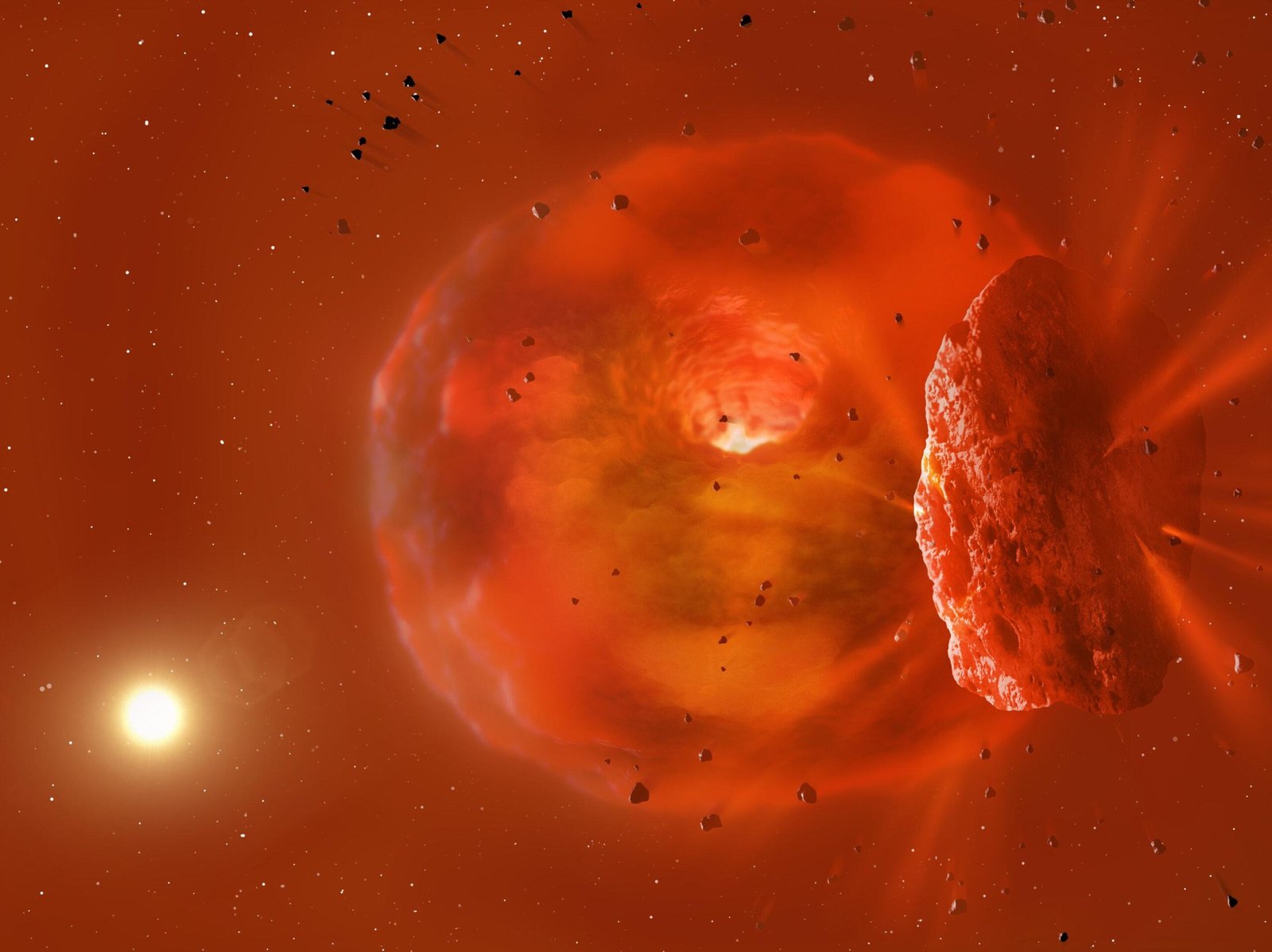
Astronomers think they may have just caught the aftermath of such a crash around a distant star called Gaia20ehk, roughly 11,000 light-years away. Which, if you’re wondering, is very far. Ridiculously far. Yet somehow telescopes here on Earth still picked up the faint clues.
The discovery began when astronomer Anastasios (Andy) Tzanidakis, a doctoral student at the University of Washington, was analyzing archived telescope data.
He noticed that the star Gaia20ehk, which should normally shine with a steady brightness, was behaving strangely.
“The star’s light output was nice and flat,” Tzanidakis explained. “But starting in 2016 it had three dips in brightness. Then around 2021 it went completely bonkers.”
Stars like our Sun typically remain stable for long periods of time, so sudden fluctuations in brightness immediately caught the researchers’ attention.
At first, astronomers wondered whether the star itself was undergoing some unusual change. But further investigation suggested something else was responsible for blocking the starlight.
A Cloud of Dust and Debris
Scientists eventually realized that large amounts of rocky debris were passing in front of the star as they orbited around it.
This debris cloud would occasionally move between the star and Earth, partially blocking the light reaching telescopes and causing the star to appear dimmer.
The most likely explanation for such a massive cloud of material is a catastrophic collision between two planets.
When planets collide, the impact can blast enormous quantities of rock, dust, and molten material into space. This debris can remain in orbit around the star for years, gradually spreading out over time.
In the case of Gaia20ehk, researchers believe the debris cloud may have been created when two rocky planets smashed into each other at extremely high speeds.
Infrared Observations Revealed the Key Clue
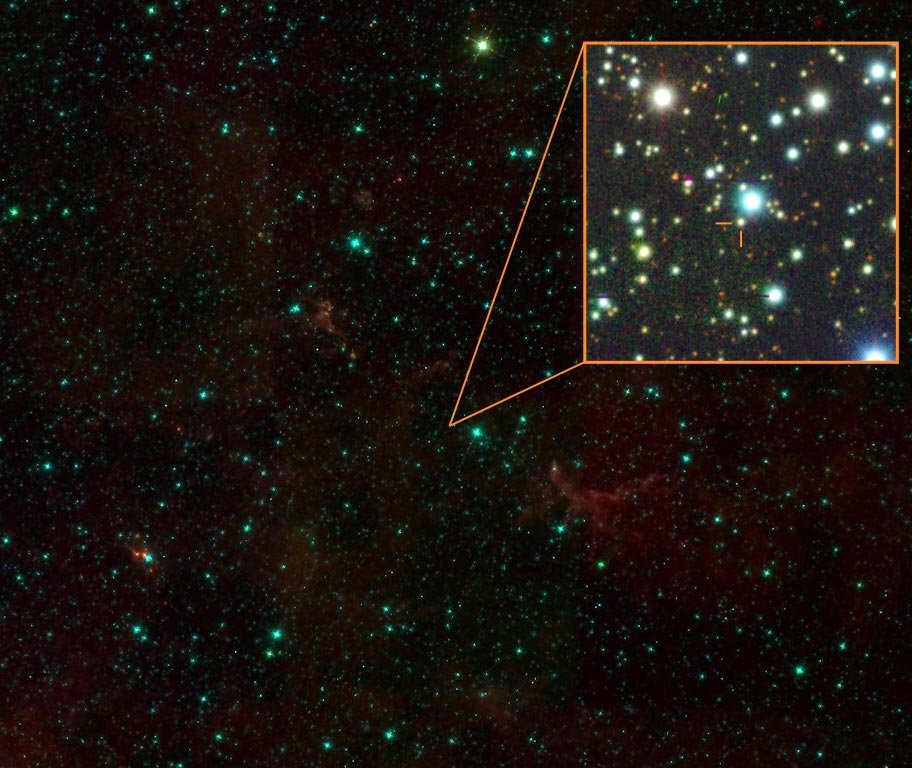
One of the most important clues came when astronomers examined the star using infrared observations.
Infrared light allows scientists to detect heat in space. When the team compared the star’s visible light with its infrared data, they noticed a surprising pattern.
As the star’s visible brightness decreased, its infrared signal increased dramatically.
This suggested that the material blocking the star’s light was extremely hot. According to the researchers, the debris cloud may have been heated to around 900 kelvin, or more than 600 degrees Celsius.
Such intense heat is exactly what scientists would expect after a powerful collision between two rocky planets.
Similar to the Event That Formed Earth’s Moon
Scientists say this discovery may resemble an important event in our own solar system’s history.
About 4.5 billion years ago, a Mars-sized object is believed to have collided with the early Earth. The impact sent huge amounts of material into orbit around our planet.
Over time, that debris gathered together and formed the Moon.
Interestingly, the debris cloud around Gaia20ehk appears to orbit its star at roughly one astronomical unit — about the same distance between Earth and the Sun.
Because of this similarity, researchers believe the distant collision could provide valuable insight into the processes that shaped our own planetary system.
However, detecting these events from Earth is extremely difficult.
For astronomers to observe a collision, the debris cloud must pass directly between the star and Earth so that it partially blocks the star’s light. Even then, the brightness changes can unfold slowly over several years.
Because of this, only a small number of planetary collisions have ever been identified outside our solar system.
A Rare Glimpse Into Planetary Evolution
The unusual flickering of Gaia20ehk has given astronomers a rare opportunity to study the aftermath of a massive planetary collision.
While scientists cannot yet determine exactly what will happen to the debris cloud, it may eventually cool and form new planetary bodies over millions of years.
For now, the discovery offers a fascinating glimpse into the violent processes that shape planetary systems across the universe.